

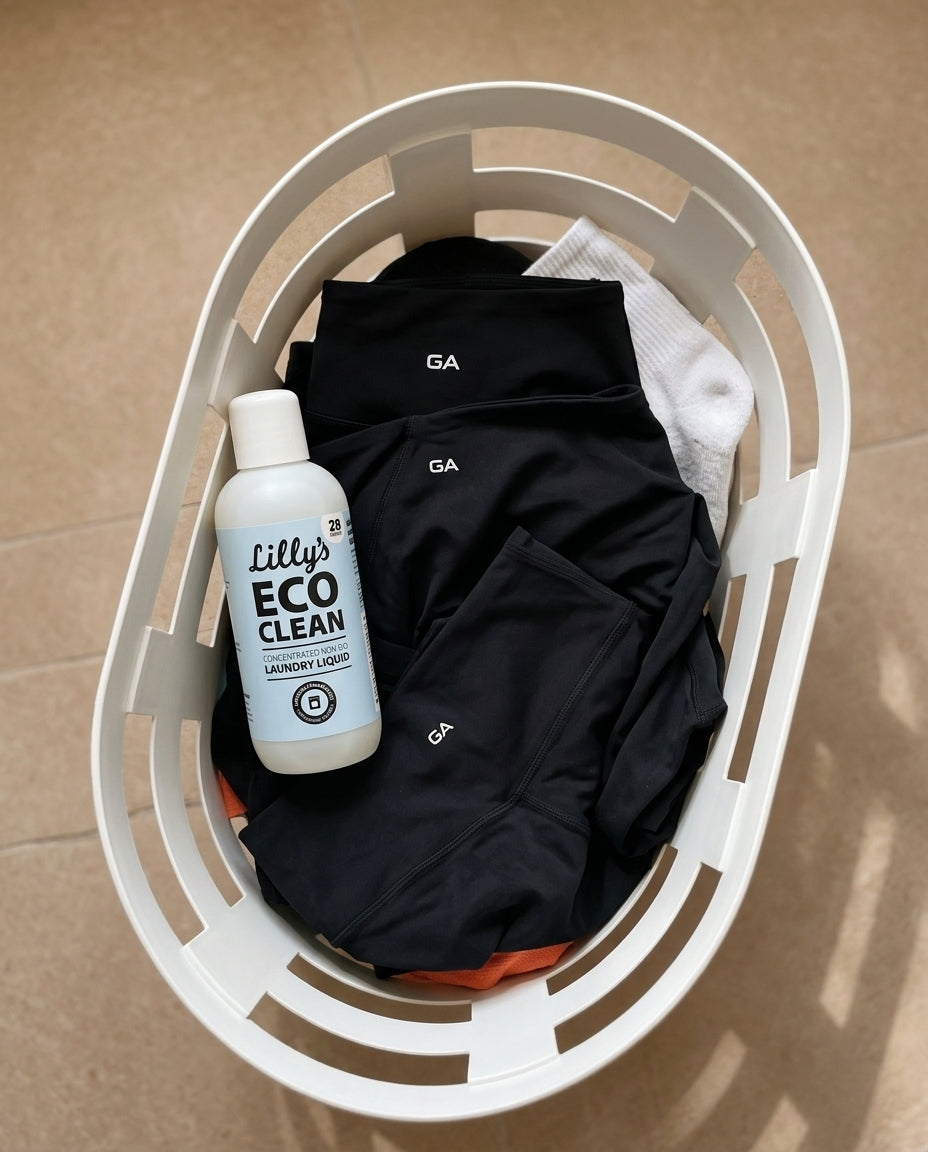
How to Wash Activewear: The Complete Care Guide for Leggings & Gym Clothes
Activewear of every kind, from leggings, sports bras and biker shorts to gym shorts and brushed sweatshirts, is built for sport, so it is easy to assume it can take anything. It cannot, and that single misconception ruins more gym wardrobes than anything else. The technical fabrics that let your kit stretch, compress and wick sweat are genuinely high-performance, but they are also delicate, and they reward roughly the same care you would give a cashmere sweater rather than the rough handling a pair of jeans shrugs off.
The good news is that caring for them well is simple once you know what actually causes the damage. This guide covers everything, from how to wash and dry your activewear to getting set-in smells out, how often to wash leggings and sports bras, the quirks of specific pieces, looking after recycled and technical fabrics, and decoding the symbols on the care label.

The Short Version
Wash activewear inside out on a cold, gentle cycle (30°C or below), with a small amount of mild detergent and no fabric softener, then air dry it at room temperature, never in the tumble dryer. Heat and softener are what quietly destroy technical fabric, causing the sagging, pilling and see-through patches most people blame on the garment itself. This applies to everything: leggings, sports bras, shorts, biker shorts, tops and sweatshirts.
| Do | Don’t |
|---|---|
| Wash cold, 30°C or below | Tumble dry or use any heat |
| Turn garments inside out | Use fabric softener |
| Use a small amount of mild detergent | Use hot water or heavy detergent |
| Wash with similar smooth fabrics | Wash with towels, denim, zips or Velcro |
| Air dry at room temperature | Iron or dry on a radiator |
| Air out and wash after sweaty sessions | Leave damp kit balled up in a bag |
Why Activewear Needs More Care Than You Think
The reason your gym kit is more fragile than it looks comes down to what it is made of. Most performance pieces, from leggings and biker shorts to sports bras and brushed sweatshirts, are knitted from a nylon or polyamide base blended with elastane, also sold as spandex or Lycra, and elastane is the part that does the stretching and the snapping back. It is also the part that heat, harsh detergent and friction break down first, and once it starts to go the fabric sags, pills and turns translucent.
Get the care right and the same garment holds its shape, its colour and its opacity for years. Get it wrong and you are replacing it within a season, usually while blaming the product for a problem your laundry routine quietly created. Almost everything below is really about protecting that elastane.
How to Wash Activewear, Step by Step
Wash in cold or cool water
You may have been told that clothes only get truly clean in hot water. With modern detergents that is no longer true, and for activewear hot water does real damage, because elastane and heat are not friends; high temperatures permanently weaken the fibre, which is what causes loss of stretch, sagging and pilling. Wash on a gentle or delicates cycle at 30°C or below, or hand wash the old-fashioned way as you would a knit.
Turn everything inside out
Washing leggings, shorts and tops inside out matters for two reasons. It keeps the outer surface, the side everyone sees, away from the abrasion that causes pilling, and it puts the sweat-facing inner layer in direct contact with the water and detergent, which is exactly where the cleaning needs to happen.
Wash with similar fabrics, not towels and denim
It is tempting to throw everything dark in together, but washing stretchy, delicate activewear alongside rough fabrics like denim or towels, or anything with zips, hooks or Velcro, is one of the fastest routes to pilling and snags. Wash your activewear with similar smooth fabrics, and if you want to be thorough, put leggings, shorts and sports bras in a mesh delicates bag.
Go easy on detergent, skip the softener
Synthetic performance fabrics are sensitive, and heavy detergents, or simply too much detergent, break them down faster and encourage pilling, so reach for a mild detergent and use less than you think you need. Fabric softener should be left out altogether: it leaves a waxy coating that blocks the fabric’s ability to wick moisture, traps bacteria and, ironically, makes your activewear smell worse over time.
How to Dry Activewear (and What Never to Do)
If one rule matters more than any other, it is this: keep your activewear away from heat as it dries. Never tumble dry leggings, shorts, sports bras or anything with elastane, because the dryer combines the two things the fabric hates most, heat and friction, and it is the single most effective way to destroy a good piece. The same goes for radiators, hot airing cupboards and long spells in direct midday sun.
Instead, hang or lay your activewear to dry at room temperature on a rack. It takes a little longer, but it is the difference between fabric that keeps its shape and fabric that slowly gives up its stretch. Air drying is also gentler on the planet and on your energy bill, which is a quiet bonus.

How to Get the Smell Out of Activewear
That stubborn smell that survives a wash is not really about the garment being dirty; it is bacteria that has settled into the fabric, fed by sweat, body oils and, very often, the waxy residue left behind by fabric softener. The good news is that it is both fixable and preventable.
The biggest preventative step is to air your kit out the moment you finish rather than balling it up damp in a gym bag, where bacteria thrive, so hang it to dry as soon as you get home even if you are not washing it straight away. For smells that have already set in, soak the garment in a basin of cold water with a cup of white vinegar for around thirty minutes before washing as usual; the vinegar breaks down the bacteria and the residue without the heat or harsh chemicals that would damage the fabric. Then leave the softener out for good.
How Often Should You Wash Leggings and Sports Bras?
As a rule, anything worn for a sweaty workout should be washed after every use, leggings, sports bras, shorts and tops included, because sweat, oils and bacteria build up in a single session and leaving them to sit is both how smells develop and how the fabric degrades.
The exception is genuinely light wear. If you have worn leggings or a sweatshirt around the house or for a gentle walk without really sweating, you can usually get a second wear out of them as long as you air them out properly in between. What you should not do is wash them more aggressively to compensate, since more heat or more detergent does far more harm than a little extra wear ever would.
Care Notes for Sports Bras, Shorts and Sweatshirts
The principles above apply to everything in your gym bag, but a few pieces have quirks worth knowing.
Sports bras
Sports bras take more strain than almost anything you own, and heat is especially hard on the elastic band and any moulded padding, so keep them well away from the dryer. Fasten any clasps before washing so they do not snag, use a delicates bag to protect the shape, and reshape the cups while damp before laying the bra flat to dry so it keeps its support.
Biker shorts and gym shorts
Biker shorts and gym shorts see the most friction of any piece, especially along the inner thigh and the gusset, which is exactly where thinning and pilling start. Turn them inside out, wash them cold, and keep them off rough surfaces during floor work. The same opacity rules that apply to leggings apply here, so if see-through fabric is a concern our guide to leggings that don’t go sheer is worth a read.
Sweatshirts and joggers
Brushed and peached pieces like sweatshirts and joggers feel soft because the surface is raised, and that raised surface is more prone to pilling and to picking up lint, so always wash them inside out and away from rough fabrics. Because they hold more water, lay them flat to dry rather than hanging them heavy and wet, which can stretch them out of shape.
Caring for Recycled and Technical Fabrics
Different fabrics are engineered for different jobs, and treating them all the same is a common and expensive mistake. Soft, brushed or peached fabrics feel wonderful but are less resistant to friction than their smooth counterparts, so wearing buttery yoga leggings for floor work, abs or CrossFit is asking for pilling; use a mat, and save the brushed pieces for lower-friction training.
The same friction logic applies outside the wash. Rough gym floors, running tracks, concrete, backpack straps and Velcro all abrade fabric and cause pilling or tears, so a little awareness of what your kit is rubbing against goes a long way. Pieces made from recycled material ask for the same gentle routine, cold wash, no softener, air dry; there is no special trick, but because recycled performance yarns are doing the same demanding job as virgin ones, the cold-and-gentle approach is what lets them last long enough for their environmental head start to actually count.
Wash Care Symbols, Quickly Explained
The little symbols on your care label are worth thirty seconds of attention, because they are the maker telling you exactly how to keep the garment alive. These are the ones that matter most for activewear:
- A tub with a number (e.g. 30): machine wash at that temperature or lower; for activewear, lower is always safer.
- A tub with a hand: hand wash only, and treat it gently.
- A square with a circle inside, crossed out: do not tumble dry; assume this for activewear even when it is not printed.
- An iron crossed out: do not iron, as the heat damages the fibres.
- A triangle crossed out: do not bleach.
- A plain square: lay flat or hang to dry, exactly what you want here.
Care Is What Makes Your Kit Last
Good care and good fabric work together. Even the best-made leggings or sports bra will not survive the tumble dryer, and the cheapest pair will not last however carefully you treat it, but pair quality construction with the routine above and you get years of wear instead of months. It is also the quiet secret to leggings that stay opaque, because most of the see-through and pilling problems people blame on the product are really heat-and-friction damage built up over time. If that is a worry of yours, our guide on how to choose leggings that don’t go sheer when you squat is a useful companion to this one.
Built to Last: The Gymathlete Pulse Leggings
Our Pulse Leggings are made for exactly this kind of long life, cut from PulseFlex™, a high-recovery fabric engineered to hold its shape, colour and opacity wash after wash, provided you keep them out of the dryer. Treat them the way this guide describes and they will outlast far more than their price suggests.
Life is full of small discomforts. Your activewear shouldn’t be one of them.
Frequently Asked Questions
Can I wash activewear in hot water?
No. Hot water breaks down the elastane that gives activewear its stretch, which leads to sagging, pilling and see-through fabric. Wash at 30°C or below on a gentle cycle.
How do you wash a sports bra?
Fasten the clasps, place it in a delicates bag, and wash cold on a gentle cycle with mild detergent. Never tumble dry, as heat ruins the elastic and any padding; reshape the cups while damp and lay it flat to dry.
Why does my activewear still smell after washing?
It is usually bacteria and fabric-softener residue trapped in the fabric. Leave the softener out, air your kit out immediately after training, and for set-in smells soak it in cold water with white vinegar for thirty minutes before washing.
Can you tumble dry leggings?
No. The dryer combines heat and friction, the two things that damage technical fabric most, and it is the fastest way to ruin a pair. Always air dry at room temperature.
How often should I wash my leggings?
After every sweaty workout. For light, non-sweaty wear you can usually get a second wear if you air them out properly in between.
Does fabric softener damage activewear?
Yes. It leaves a waxy coating that stops the fabric wicking moisture and traps the bacteria that cause smells, so it is best left out entirely.
How do I stop my leggings and shorts pilling?
Wash them inside out on a cold, gentle cycle, away from rough fabrics and zips, skip the dryer, and avoid friction on rough surfaces like bare gym floors.