

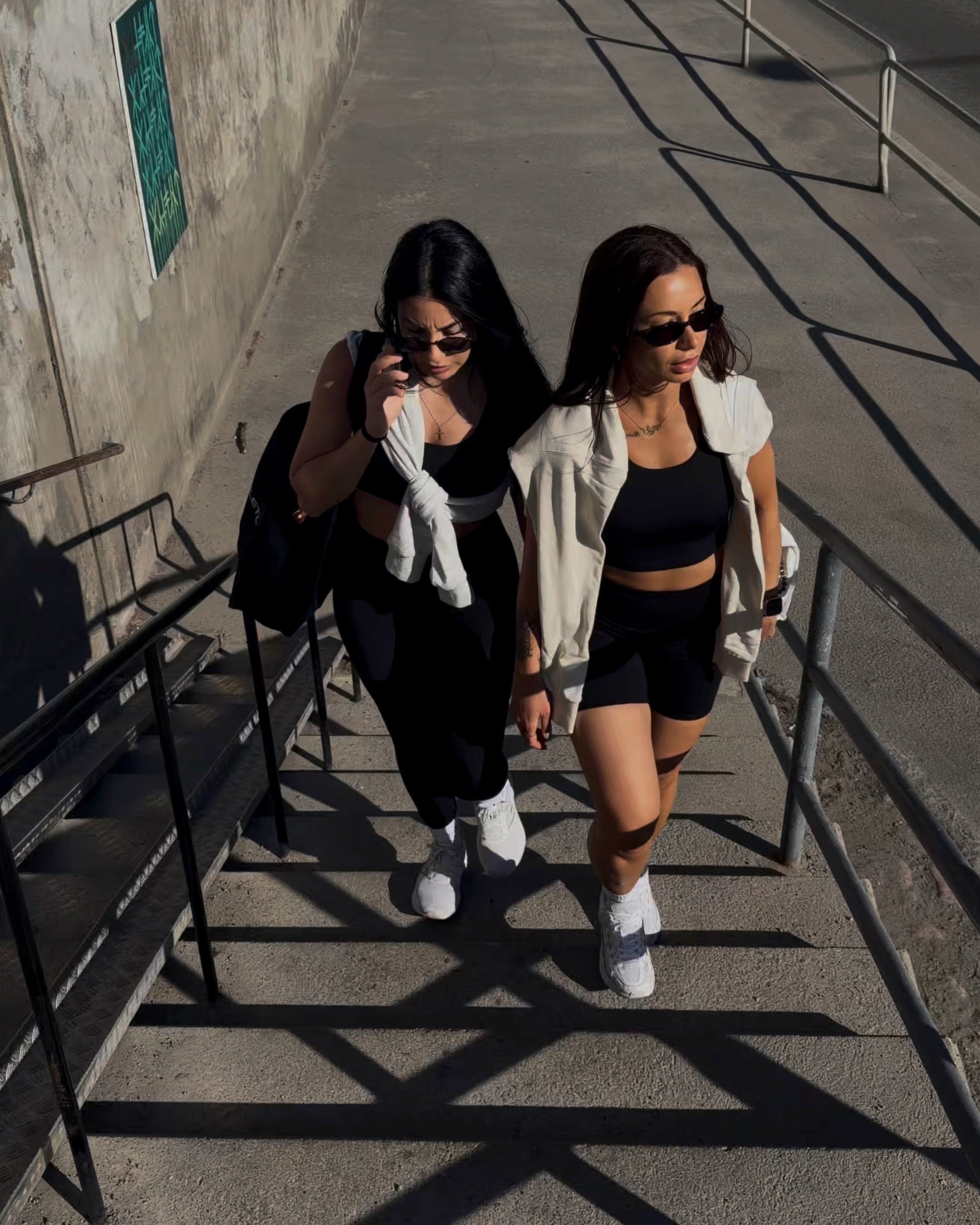
What to Wear to the Gym: 4 Outfit Ideas for Women
What you wear to the gym should be the last thing on your mind once you are there. That is really the whole test. If you are pulling your top down between sets, checking whether your leggings have gone see-through, or adjusting a waistband that will not stay put, the kit is doing the opposite of its job, and you are spending attention on your clothes that belongs on your training.
Getting it right is not complicated, and it is not about owning a lot. It is about a handful of pieces that fit properly, move with you, and hold up. Below are four outfits for the ways women actually train, plus the essentials they are all built from and the mistakes worth avoiding.

The Short Answer
For most women, the reliable gym outfit is a supportive sports bra, high-rise leggings that stay opaque and stay put, a top that will not ride up, and trainers suited to what you are doing. Build from those four, choose your support level based on the impact of your session, and add layers you can take off as you warm up.
The Essentials Every Outfit Is Built From
Before the outfits, the building blocks. Get these four right and everything else is styling.
A sports bra that matches your session
Support should be chosen for impact, not habit. High-impact training such as running or plyometrics needs firmer support and secure straps; lifting and low-impact work are comfortable in something with medium support that still lets you breathe deeply. Our Pulse Bra is built for that everyday middle ground, supportive enough to train in and comfortable enough to forget about.
Leggings you never have to check
The non-negotiables are a high, structured waistband that stays put, real four-way stretch, and fabric that stays completely opaque at the bottom of a squat. If you have ever had a pair fail that test, our guide on choosing leggings that don’t go sheer explains exactly why it happens.
A top that stays where you put it
Close-fitting tops are the safe choice for anything involving bending or inverting, since a loose top will fall over your face the moment you go upside down. A slightly relaxed layer works fine for lifting and machines, where you are mostly upright.
Layers you can lose
You warm up fast, so choose an outer layer you can take off in one movement and leave on the bench. The Pulse Active Jacket zips through for exactly that reason, and a cropped sweatshirt pulls off just as easily.
Outfit 1: Lifting and Strength Training
Strength work asks for stability rather than aerodynamics. You want a snug base that does not shift as you brace, and nothing loose enough to catch on a bar.
- The look: Pulse Leggings with the Pulse Bra.
- Why it works: A high, firm waistband supports your midsection when you brace under load, and compressive fabric holds everything steady through squats, hinges and presses.
- The detail that matters: Opacity. Squats and deadlifts put the fabric under maximum stretch across the glutes, which is exactly where a weaker pair gives way.
- Add: Flat-soled trainers for stability, and Endurance Socks that stay put.

Outfit 2: Pilates, Yoga and Reformer
Low-impact does not mean low-demand on your clothes. You will bend, invert, and hold positions where anything loose will simply fall.
- The look: Pulse Leggings with the Pulse Bra, close-fitting and nothing more.
- Why it works: Nothing rides up when you invert, and four-way stretch lets you move through a full range without the fabric fighting you.
- The detail that matters: No hardware. Zips and buttons catch on a reformer carriage, so keep bottoms clean and simple. Grippy socks are essential on the machine.
- New to it? Our complete guide to reformer Pilates covers what to expect in your first class.

Outfit 3: Cardio, Running and HIIT
Higher impact changes the brief. You want more support, fabric that handles sweat, and a layer you can strip off the moment you warm up.
- The look: Pulse Leggings and the Pulse Bra, with the Flow Crop Sweatshirt over the top for the walk in and the warm-up.
- Why it works: Compressive leggings stay put through impact instead of shifting with every stride, and a cropped layer comes off in one movement once your heart rate is up.
- The detail that matters: Support. High-impact work is where an under-supportive bra becomes genuinely uncomfortable, so get the size right and fasten it properly.
- Add: Cushioned trainers suited to running, not flat lifting shoes.

Outfit 4: Studio to Street
Most sessions do not end at the gym door. If you are heading to a coffee, the shops or straight to work, build an outfit that does not announce that you have just trained.
- The look: Pulse Leggings with a Flow Sweatshirt or the Pulse Active Jacket over your bra, and the Balance Tote for everything else.
- Why it works: Clean lines and muted tones read as considered rather than sporty, so the same pieces work in the squat rack and on the street.
- The detail that matters: Fabric that still looks good after the session. Pilling and fading are what make activewear look tired off-duty.
Common Gym Outfit Mistakes
Most kit problems come down to a handful of avoidable errors, and almost everyone has made at least one of them.
- Sizing down for support. Over-stretched fabric goes sheer and digs in. Snug is the goal; straining is not.
- Choosing a bra by habit, not by impact. A bra that is perfect for Pilates is not the one you want for sprints.
- Cotton for sweaty sessions. It absorbs and stays wet, which is why performance fabrics exist.
- A loose top for floor or inverted work. It will end up over your head, every time.
- Brushed fabrics for floor work. Soft, peached fabrics feel wonderful but pill faster against rough surfaces, so use a mat.
What to Look for in the Fabric
The fabric decides whether a piece is worth owning, and two things matter more than any marketing claim on the label: density and recovery. Dense, tightly knit fabric stays opaque under stretch, and strong recovery is what makes it snap back into shape instead of sagging out after a month.

The rest follows from there. Moisture-wicking keeps you dry, a matte finish looks better than high shine under gym lighting, and flatlock seams sit smooth against the skin instead of rubbing. Get these right and a piece lasts years rather than a season, which is also what makes it cheaper in the long run, something we break down in our guide to what leggings really cost.
Train in it. Live in it.
Every piece we make is designed to disappear once you have it on: supportive where it needs to be, opaque through every rep, and clean enough to wear long after the session ends. Start with the Pulse Leggings and the Pulse Bra, and build from there.
Life is full of small discomforts. Your activewear shouldn’t be one of them.
Frequently Asked Questions
What should a woman wear to the gym?
A supportive sports bra matched to the impact of your session, high-rise leggings that stay opaque and stay put, a top that will not ride up, and trainers suited to what you are doing. Add a layer you can easily take off as you warm up.
What should I wear to the gym as a beginner?
Keep it simple: a supportive bra, leggings you trust, and a close-fitting top. You do not need a big wardrobe, just a few pieces that fit properly and that you never have to adjust mid-session.
Is it OK to wear cotton to the gym?
For light sessions, yes. For anything sweaty, cotton absorbs moisture and stays damp, so performance fabrics that wick and dry quickly are far more comfortable.
What do you wear to Pilates or yoga?
Close-fitting tops that will not fall over your face when you invert, high-rise leggings with four-way stretch and no zips or hardware, a medium-support bra, and grippy socks if you are on a reformer.
How many gym outfits do I actually need?
Fewer than you think. Two or three sets of well-made pieces you genuinely like will outlast and outperform a drawer full of cheaper kit, and they cost less per wear over time.