

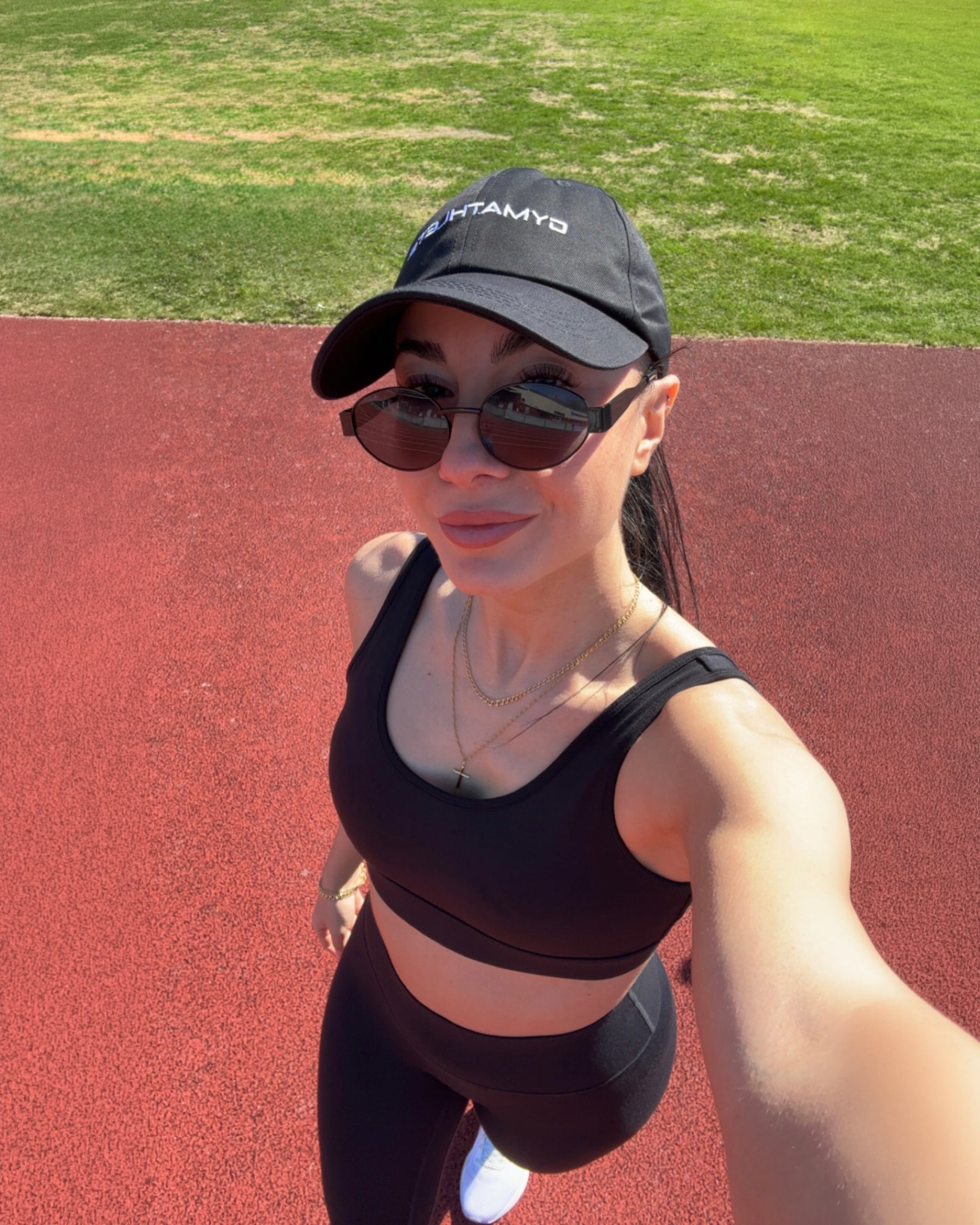
High-Waisted Leggings That Stay Up: How to Choose the Right Pair
There is a particular kind of irritation that only leggings can produce: the slow, mid-set slide of a waistband folding over on itself, the little tug you do at the top of every rep, the moment you give up and hitch them back up between exercises. High-waisted leggings are supposed to solve this, and the good ones do. But plenty of pairs sold as high-rise still roll, dig or slip, and the reason almost always comes down to a few things you can check before you buy.
This guide is about what actually keeps a high-waisted pair where you put it: the waistband construction, the fabric, and above all the fit. Get those right and you stop thinking about your waistband entirely, which is the whole point.
The Short Answer
High-waisted leggings stay up when three things line up: a wide, structured waistband, dense fabric with strong recovery, and the correct size for your body. A waistband that rolls is usually a sign of thin fabric, a too-narrow band, or sizing down so the fabric is forced to stretch past what it can hold.
Why Do High-Waisted Leggings Roll Down?
A waistband rolls for mechanical reasons, not mysterious ones. When you bend at the hips, the fabric across your stomach has to compress and fold somewhere, and if the waistband is narrow or unsupported it folds outward on itself, which is the roll you feel creeping down through a session. The wider and more structured the band, the more evenly that tension is spread, and the less any single point is forced to give.
The other main cause is the fabric itself. A band made from thin, low-recovery material stretches out over the course of a workout and simply stops gripping; once the elastane has been pushed past its limit, either by poor quality or by a size too small, it no longer snaps back, and the leggings slide. This is why a pair can feel secure in the fitting room and give up an hour into training: the failure only shows under sustained movement.
What Actually Keeps Them Up
If you want a pair that genuinely stays put, these are the things that decide it, in roughly the order that matters.
- A wide waistband. A tall, broad band distributes tension across a larger area of your midsection instead of concentrating it in a thin strip that folds. This is the single biggest factor.
- Dense fabric with strong recovery. The band and the body of the legging need to snap back to shape after every stretch. Recovery is what stops them stretching out and sliding down as you move.
- A structured, not floppy, band. Some high-rise bands are just more of the same thin fabric folded over. The ones that hold have real structure, so they resist folding in the first place.
- The right size. Even a perfect waistband slips if the leggings are too big or rolls if they are too small. Fit is inseparable from hold.
Why the Right Size Matters Most
It is tempting to size down for a tighter, more secure feel, but with waistbands this usually backfires. Sizing down forces the fabric to stretch beyond its comfortable range, and over-stretched fabric both goes sheer and loses its grip, so you end up with a band that digs in at first and then rolls as the fabric fatigues. Sizing up, on the other hand, leaves the band under-tensioned and prone to sliding.
The pair that stays up is the pair in your actual size: snug and supported, with a waistband that sits flat against your stomach without pinching or gaping. If you are between sizes, the safer choice depends on the fabric, but for opacity and long-term hold, your true size almost always beats sizing down. It is the same principle we cover in our guide on choosing leggings that don’t go sheer, because the two problems share a cause.
High-Rise, Ultra-High-Rise and Crossover Waistbands
Not every high waistband is the same, and the right one is partly personal.
Standard high-rise
Sits at or just above the navel. The everyday choice, and for most people the most versatile: high enough to feel secure and smoothing, without feeling restrictive.
Ultra-high-rise
Sits higher up the waist, offering more coverage and a stronger sense of being held in. Popular for lifting and for anyone who wants nothing to shift, though the higher the band, the more the fabric and fit have to be right to avoid rolling at the top.
Crossover and V-front bands
A dipped or crossed front is mostly a style choice, but a well-made one can also sit more comfortably on the hips and reduce pressure across the stomach. Construction still matters more than shape: a crossover band made from thin fabric will roll just like any other.
How to Keep the Hold Over Time
A waistband that holds when new only keeps holding if you look after the recovery in the fabric, and the enemy, as always, is heat. Tumble drying breaks down the elastane that gives the band its snap-back, so a pair that gripped perfectly can start sliding after a few hot cycles. Skip the dryer and air dry instead.
Wash cold and inside out, use a little mild detergent, and leave out the fabric softener, which coats the fibres and speeds up the loss of stretch. Done consistently, this keeps the waistband gripping for years rather than months, and our full guide to washing activewear covers the routine in detail. It is also part of why a well-made pair works out cheaper over time, something we break down in our piece on what leggings really cost.
A Waistband That Stays Put
The Pulse Leggings are built around a high, structured waistband designed to sit flat and stay there, cut from PulseFlex™, our dense high-recovery fabric, so the hold does not fade after a month of wear. No rolling, no hitching, no tugging between sets, just a pair you can put on and forget about.
Life is full of small discomforts. Your activewear shouldn’t be one of them.
Frequently Asked Questions
Why do my high-waisted leggings keep rolling down?
Usually a waistband that is too narrow or made from thin, low-recovery fabric, or leggings sized too small so the fabric is over-stretched. A wide, structured band in your correct size is what stops the roll.
How do I stop leggings from folding at the waist?
Choose a wide, structured high-rise band rather than a thin folded-over one, wear your true size rather than sizing down, and protect the fabric’s recovery by air drying and skipping fabric softener.
Should high-waisted leggings feel tight on the stomach?
Snug and supported, not pinching. A good band sits flat against your stomach with even pressure. If it digs in or leaves deep marks, the leggings are likely too small, which can also make them roll.
Do more expensive leggings stay up better?
Not automatically, but well-made pairs tend to use wider, structured waistbands and higher-recovery fabric, which are exactly what keeps them up. Construction matters more than price alone.
What is the best waistband height for leggings?
For most people a standard high-rise sitting at or just above the navel is the most versatile. Ultra-high-rise gives more coverage and hold for lifting, while the best height ultimately depends on your body and what you are training.